Keynotes
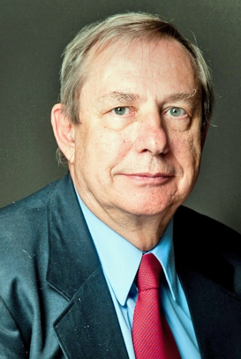
Prof. Marek Rusinkiewicz
Title: From Search Trees to Blockchains: A History of Landmark Ideas in Computing
Abstract: In my talk, I will discuss the emergence of several foundational technologies that have helped shape today’s information landscape, using as examples projects in which I was involved. I will first describe the early work in artificial intelligence leading to the world’s first computer chess match. I will then talk about the InfoSleuth project at MCC, which was one of the early attempts to create a large self-organizing community of software agents collaborating to solve complex information processing tasks -- a precursor to many of today's distributed intelligent systems. Finally, I will describe how practical challenges in document versioning and information retrieval led to the development of two technologies that have since become fundamental to modern computing: cryptographically linked timestamping (blockchains) and Latent Semantic Indexing
Biography: Marek Rusinkiewicz is a computer scientist, an educator, and a former research executive. Currently he is the Dean Emeritus of the College of Computing at the New Jersey Institute of Technology (NJIT). He joined NJIT after retiring from his position as a Senior Vice President and the General Manager of Applied Research Laboratories at Telcordia Technologies (formerly Bell Communication Research), which included R&D centers in New Jersey, Texas, Taiwan and Poland. Under his leadership, Telcordia Labs carried out research in telecommunication networks, mathematical sciences, software engineering, information processing, and information security.
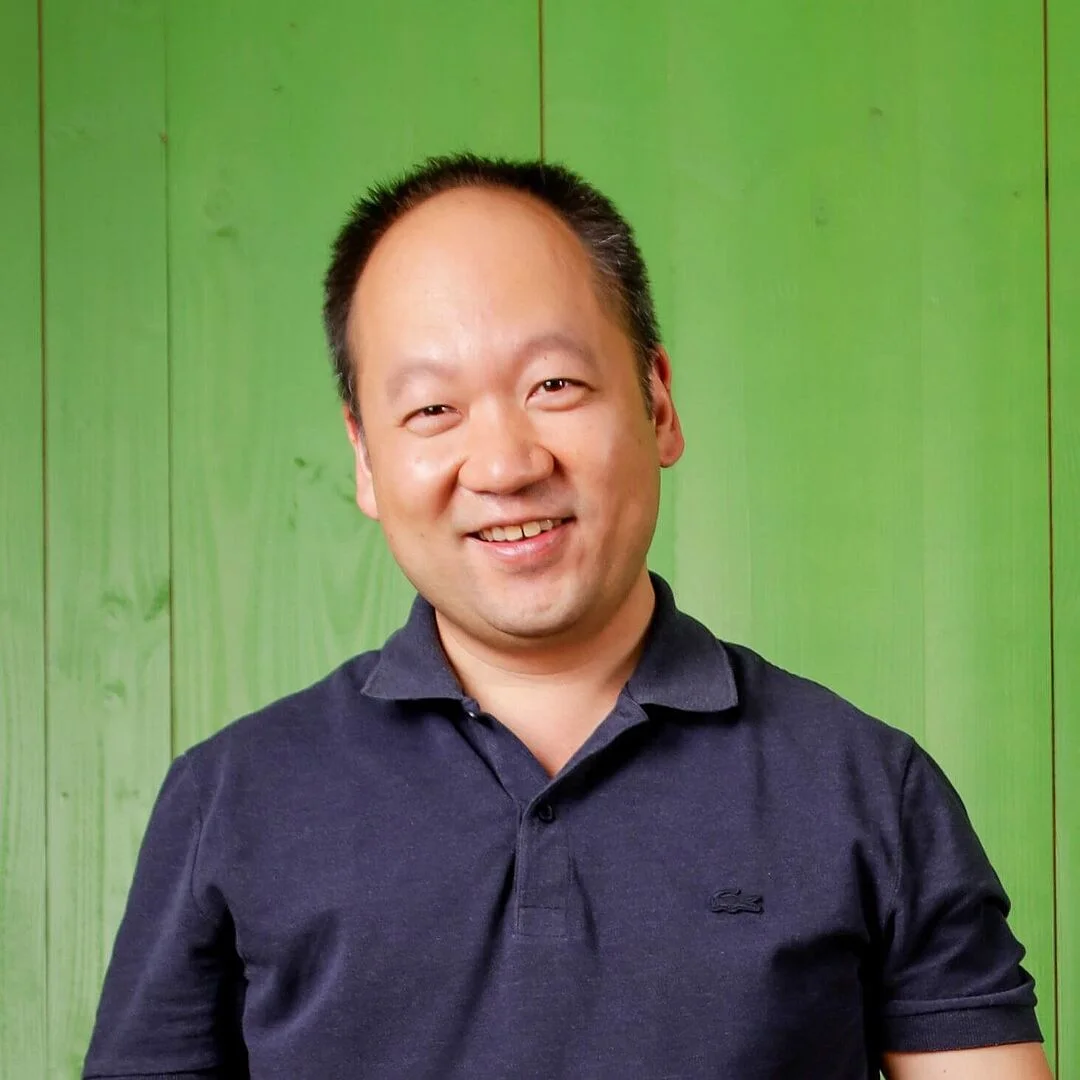
Prof. Stefan Tai
Title: Who Owns Complexity? Responsibility Refactoring through Continuous Platformication
Abstract: Software abstractions do not simply make complexity disappear: they redistribute it, and with it, responsibility. This keynote examines this redistribution through continuous platformication: the recurring emergence and adoption of new platform capabilities that reshape the boundary between application-level concerns and platform-provided capabilities. Each such shift changes not only how software is built and operated, but also where responsibilities reside. Responsibility refactoring describes the resulting redistribution of responsibilities for implementation, deployment, operation, security, quality, and trust across technical and organizational boundaries. I will explore these shifts across service-oriented and cloud computing, contemporary platform engineering and decentralized systems, and consider how they extend into agent-oriented architectures and AI-driven software engineering. Taken together, these developments reshape the role of software engineers and challenge established notions of software architecture and quality. Building on this perspective, I will outline a research roadmap addressing system-wide observability, empirical quality assessment, platform-enabled trust, evidence-driven engineering, and ecosystem-level architecture and governance. Where does the complexity go, who becomes responsible for it, and how can those responsibilities be made explicit and dependable?
Biography: Stefan Tai is a Full Professor and Head of the Chair of Information Systems Engineering at TU Berlin, a role he has held since 2014. His research focuses on software architecture and engineering for distributed systems, with particular interests in cloud-native and decentralized systems, platform engineering, observability, and engineering trustworthy software systems. His career spans three decades of research in both industry and academia. Before joining TU Berlin, he was a Full Professor at the Karlsruhe Institute of Technology (KIT) and spent nearly a decade as a Research Staff Member at the IBM Thomas J. Watson Research Center in New York. His work combines systems-oriented computer science with interdisciplinary perspectives, seeking foundational advances that remain grounded in real systems, practical challenges, and opportunities for technology transfer.
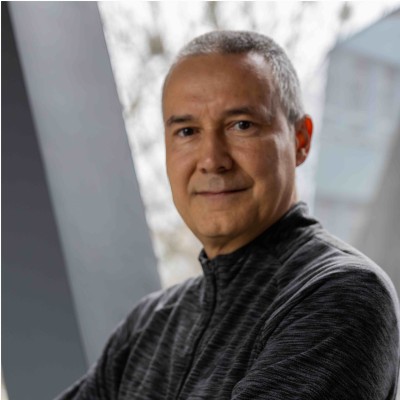
Prof. Lech Madeyski
Title: The Model Is a Service: LLM4SCREENLIT for Credible Secondary Studies in Service-Oriented Computing
Abstract:
Systematic reviews consolidate the evidence a research community relies on, and
screening titles and abstracts is one of the most labour-intensive steps in producing one.
Large language models (LLMs) promise to compress that work from months into hours, and
Service-Oriented Computing — already applying them to tasks such as service composition —
will reach for them here too. This talk argues that the model is no longer an artefact a
researcher holds but a service they call, and that this turns credibility into a services
problem.
Two failures compound. The first is measurement. On a 9,695-article secondary study, the
LLM that maximises Accuracy loses 63.3% of the relevant evidence. The model with the best
Matthews Correlation Coefficient (MCC), the standard remedy for class imbalance, still
loses 43.9%. A cost-sensitive criterion, the Weighted Matthews Correlation Coefficient
(WMCC) proposed in LLM4SCREENLIT, selects a model that loses only 5.8%.
The second failure is delivery. On a benchmark built from a Service-Oriented Computing
review of 1,130 records, recording the model name turned out not to record what ran. One
unpinned run was served by thirteen providers at precisions from fp4 to bf16. Nine
endpoints were pinned, one per model, and each was sent the same request twice. Four
changed their own decision between the two calls. A local run reproduced across all 1,130
records. No hosted endpoint has been shown to do the same.
The talk presents LLM4SCREENLIT — the WMCC, the Lost Evidence metric, decision trees for
benchmarking and deployment, and the provenance record a screening result must carry — and
asks what a service contract must guarantee before a model may be used as a scientific
instrument.
Biography: Lech Madeyski is an Associate Professor and Deputy Head of the Department of Applied Informatics at Wrocław University of Science and Technology. He has held visiting appointments at Keele University, Lancaster University and Blekinge Institute of Technology. His research applies AI/ML and data science to software engineering — most recently the credible evaluation of LLMs for screening in systematic literature reviews — alongside software defect prediction, vulnerability prediction, code-smell detection, code and test quality, mutation testing, and robust statistical methods for empirical research. With Barbara Kitchenham and Martin Shepperd he co-authored LLM4SCREENLIT, guidelines for the credible use of LLMs in study screening that underpin this talk. With Kitchenham and David Budgen he established SEGRESS, the unified reporting standard for secondary studies in software engineering — an extension of PRISMA 2020, the medical standard. His collaboration with Kitchenham spans over a dozen joint papers. He is the founder and Editor-in-Chief of the e-Informatica Software Engineering Journal, appears in the Stanford/Elsevier "World's Top 2% Scientists" ranking, and has served on the program committees of ICSE 2026 and 2027, FSE 2025, and ASE 2023 (all CORE A* conferences).