Łódź - The City of Creativity and Industrial Heritage
Łódź is a city of contrasts which intrigues almost at every step. It is full of factories and, at the same time, it is very green; eclectic but also avant-garde. Łódź dazzles with the lavishness of factory owners’ palaces and astonishes with artistic installations.
Although the history of the city spans over six hundred years, the dynamic development of Łódź came a little less than 200 years ago. From a small town it was in the beginning of the 19th century, it quickly became the “promised land” giving dozens of thousands of families hope for a better tomorrow. Around the city, you can find numerous traces of the multicultural working class melting pot. Łódź was such a pot up to World War II. After the war, having become the cinematic capital of Poland, it opened another important chapter of its history. In 2017 Łódź was inducted into the UNESCO Creative Cities Network and named UNESCO City of Film. In 2019, it received the title of Best Value Destination from the well-known British travel guide publisher Lonely Planet. Meanwhile, in 2022, Łódź made it onto the National Geographic Best of the World list!
Today it is a creative city, a city of festivals, a city which is being discovered all over again. It is located in the very heart of Poland, at the crossing of two main highways – you could say that all the roads lead to… Łódź.
To learn more you can visit: https://lodz.travel/en/tourism/
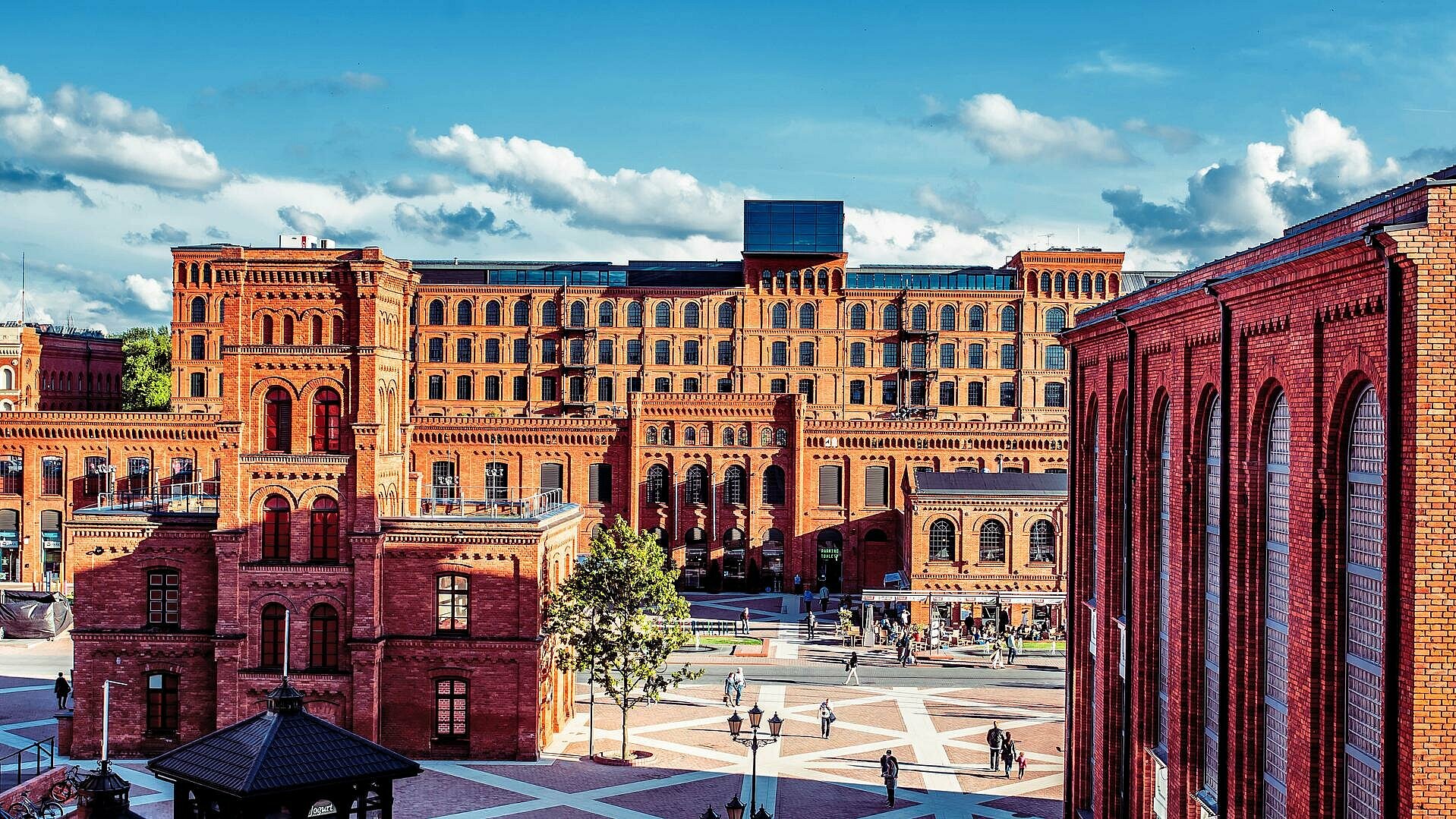
Manufaktura
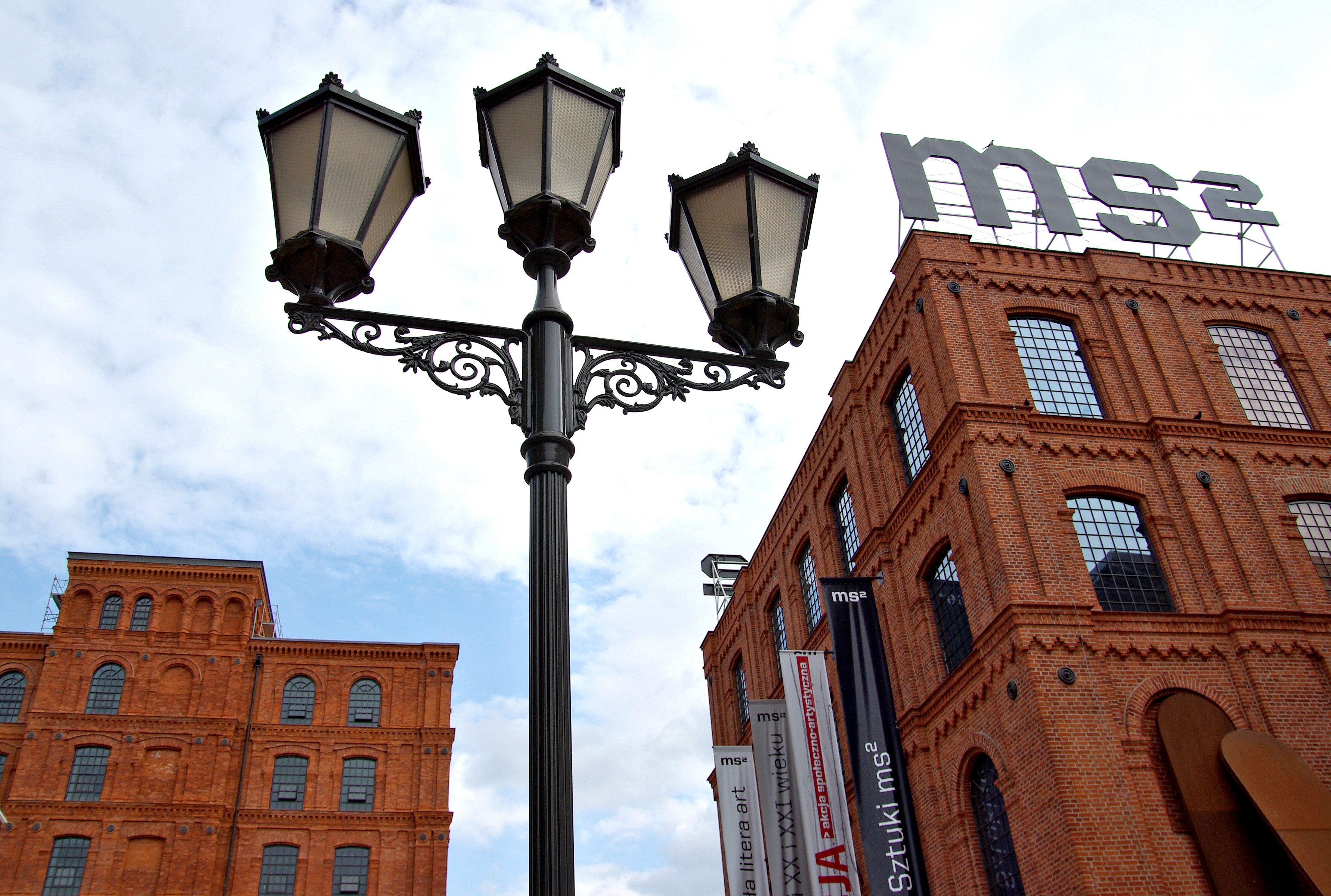
One of the largest commercial and recreational complexes in Poland, Manufaktura stands on the former grounds of Izrael Poznański’s textile factory. Its four-year renovation-covering the old weaving mill, power plant, finishing buildings, and fire station-was the first major example of large-scale industrial revitalization in the country. This remarkable fusion of history and modern architecture has received numerous awards.
Manufaktura offers over 300 shops, restaurants, museums, nightclubs, a bowling alley, laser paintball, a climbing wall, billiards, a dance school, a cinema, and a hotel. Children and adults alike can enjoy the entertainment center and the Experymentarium. At the center of the complex is a spacious square with fountains, hosting concerts and open-air events. During the summer, visitors can relax on the city beach, while winter brings an outdoor ice rink.
The most iconic element of the complex is the monumental gate on Ogrodowa Street, once the main entrance to the factory grounds. In addition to the preserved industrial buildings, the area also includes the former residence of the Poznański family, now housing the Museum of the City of Łódź.
Łódź Cathedral
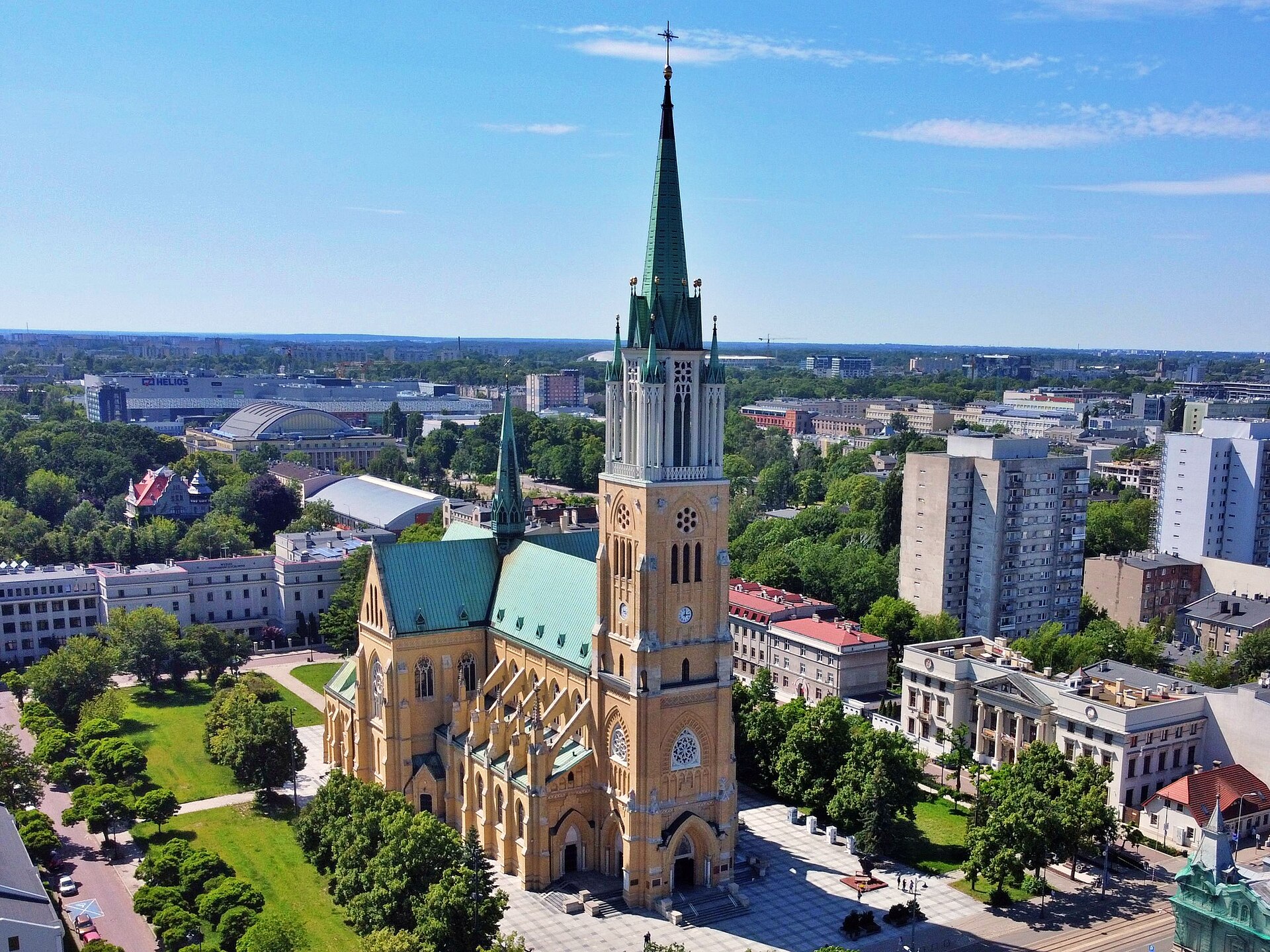
Construction of the cathedral began before World War I, while the Diocese of Łódź was not established until 1920 by Pope Benedict XV. The church was consecrated in 1922 by its parish priest, Bishop Wincenty Tymieniecki, a well-known Łódź figure. During World War II, the Germans removed the cathedral’s furnishings, destroyed its stained-glass windows, and took away the largest bell-Zygmunt, also known as “the Heart of Łódź.” A new version of the bell was cast in 2011 to mark the 100th anniversary of the original.
The Archcathedral is built in the Neo-Gothic style. It contains a 58-voice organ on the main choir at the rear of the church, as well as a 10-voice organ in the side choir near the presbytery. The church regularly hosts organ music concerts, and beneath the building there is a multimedia hall that is home to the Multiculturality Center.
EC1
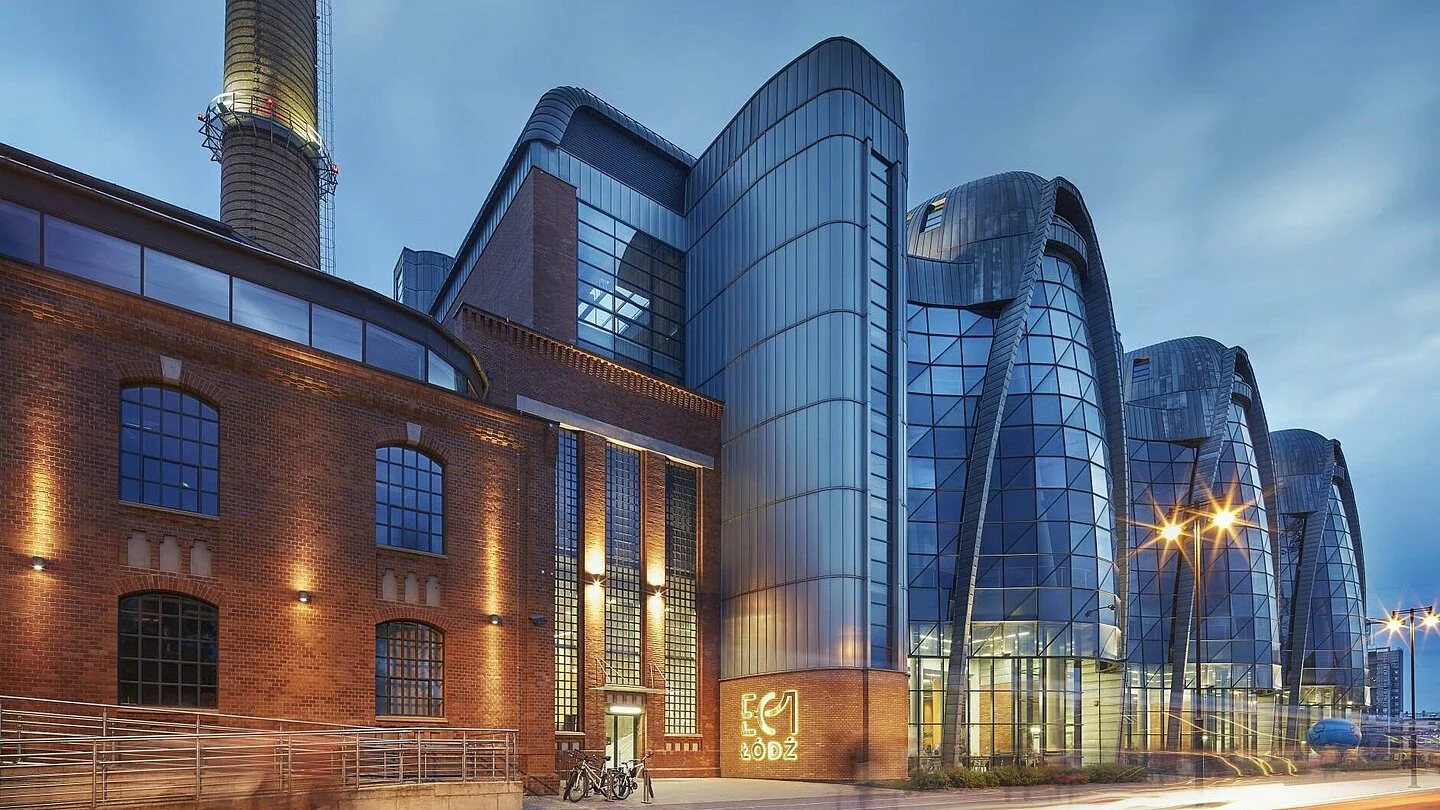
The first municipal power plant in Łódź was made up of two sections: EC1 East, launched in 1907, and EC1 West, built during the interwar years. After World War II, the Łódź Power Plant was converted into a combined heat and power facility, serving local residents until the early 21st century. In 2008, revitalization of the historic structures began as part of the New Center of Łódź project.
Today, the complex hosts the most advanced planetarium in Poland, the National Center for Film Culture, and the Center for Comics and Interactive Narration, developed by the organizers of the International Festival of Comics and Games. The site also includes conference facilities and event spaces, such as the impressive Machine Hall measuring 1,360 m².
In January 2018, the interactive Science and Technology Center-currently the largest facility of its kind in Poland in terms of area-opened its doors. Within nearly 8,500 m² of exhibition space in EC1 West, visitors can explore three educational routes: one devoted to energy processing, another to the development of knowledge and civilization, and a third revealing the mysteries of the micro- and macrocosmos.
Piotrkowska Street
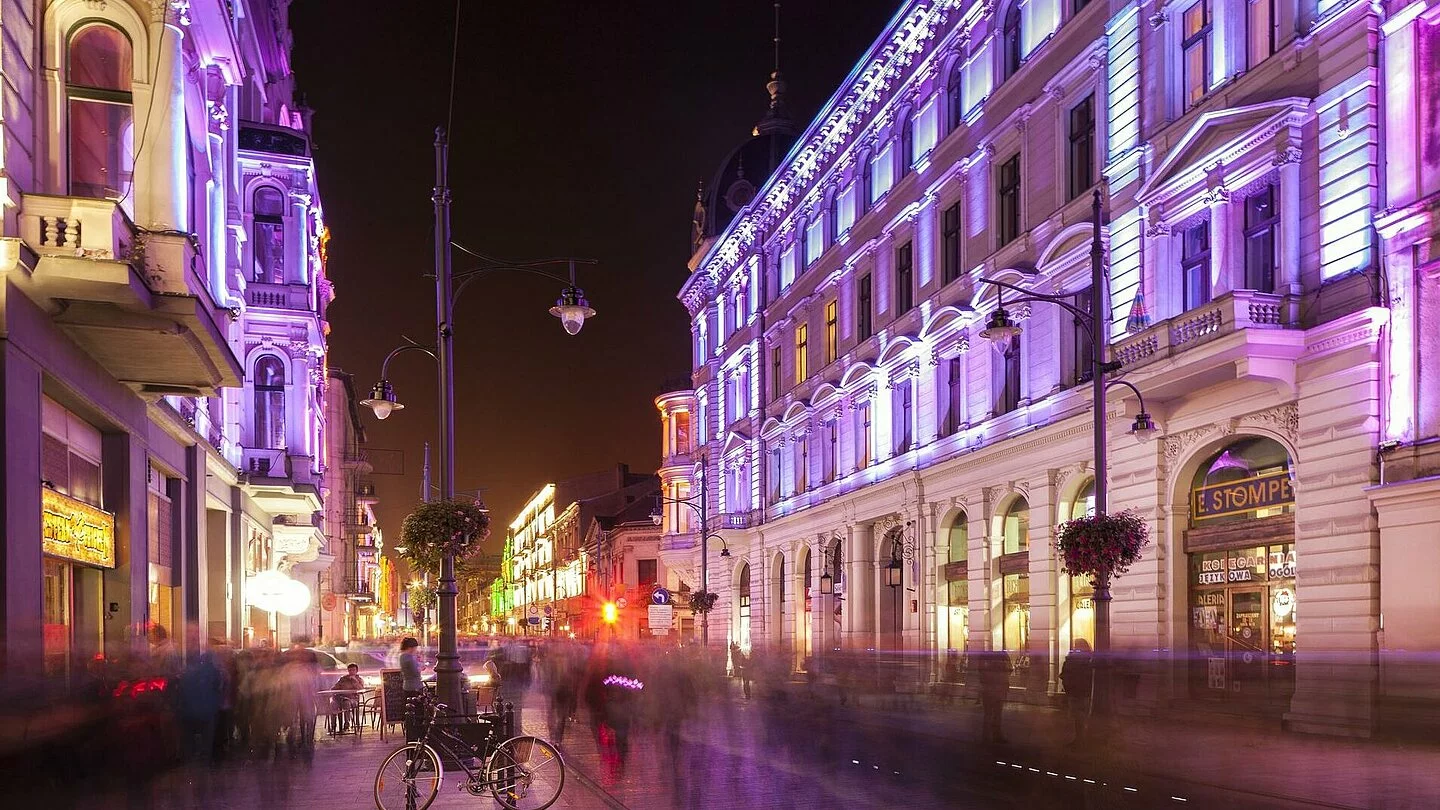
One of the most famous streets in Poland-and the country’s longest pedestrian promenade-Piotrkowska is a true symbol of Łódź. Its historic tenement houses and elegant palaces are home to numerous shops, restaurants, cafés, courtyard eateries, pubs, and music clubs. Piotrkowska remains lively throughout the year, and events such as the Light Move Festival or the Songwriter Festival add to its distinctive atmosphere.
While walking along Piotrkowska, it is worth stepping into the renovated courtyards, including the OFF Piotrkowska backyard-considered one of modern Poland’s standout attractions. Tourists and locals are equally drawn to the Passage of Rose and Birth of a Day installations. It’s also worth looking up: the façades along Piotrkowska are rich with eclectic architectural details like caryatids, reliefs, and bay windows. And if you look down, you will find the Walk of Fame, honoring Łódź’s cinematic traditions, as well as the Monument of Łódź Citizens-an extraordinary section of pavement made from nearly 17,000 paving stones, each marked with a cast-iron plaque bearing the names of city residents.
Łódź Fabryczna Area
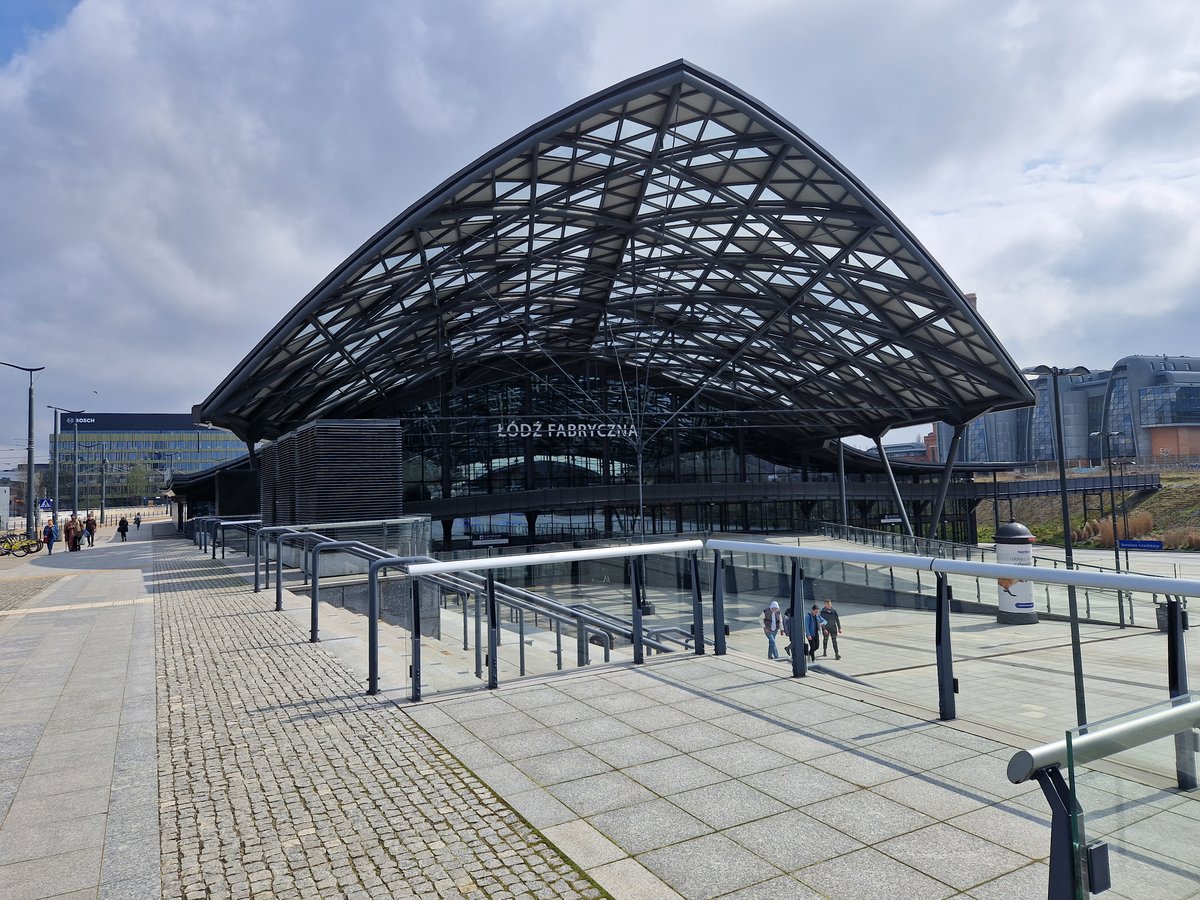
Łódź Fabryczna is among the most advanced railway stations in Poland and stands as a central symbol of the city’s modern transformation. First opened in the 19th century to support Łódź’s rapidly expanding textile industry, the station underwent a complete reconstruction between 2011 and 2016, emerging as a large underground transportation hub at the core of the New Centre of Łódź. Its impressive glass-covered main hall, four platforms located 16.5 meters below ground level, and integrated links to trams, buses, parking facilities, and pedestrian pathways create a striking blend of historical heritage and contemporary urban design.
Today, Łódź Fabryczna serves as a vibrant gateway to the city, equipped with modern conveniences, commercial areas, and an architectural layout that leaves a strong impression on visitors from across Poland and Europe. It also plays a key role in upcoming infrastructure developments, including the planned cross-city tunnel that will connect it with other major stations-further reinforcing its importance as a cornerstone of Łódź’s ongoing urban renewal.
Księży Młyn
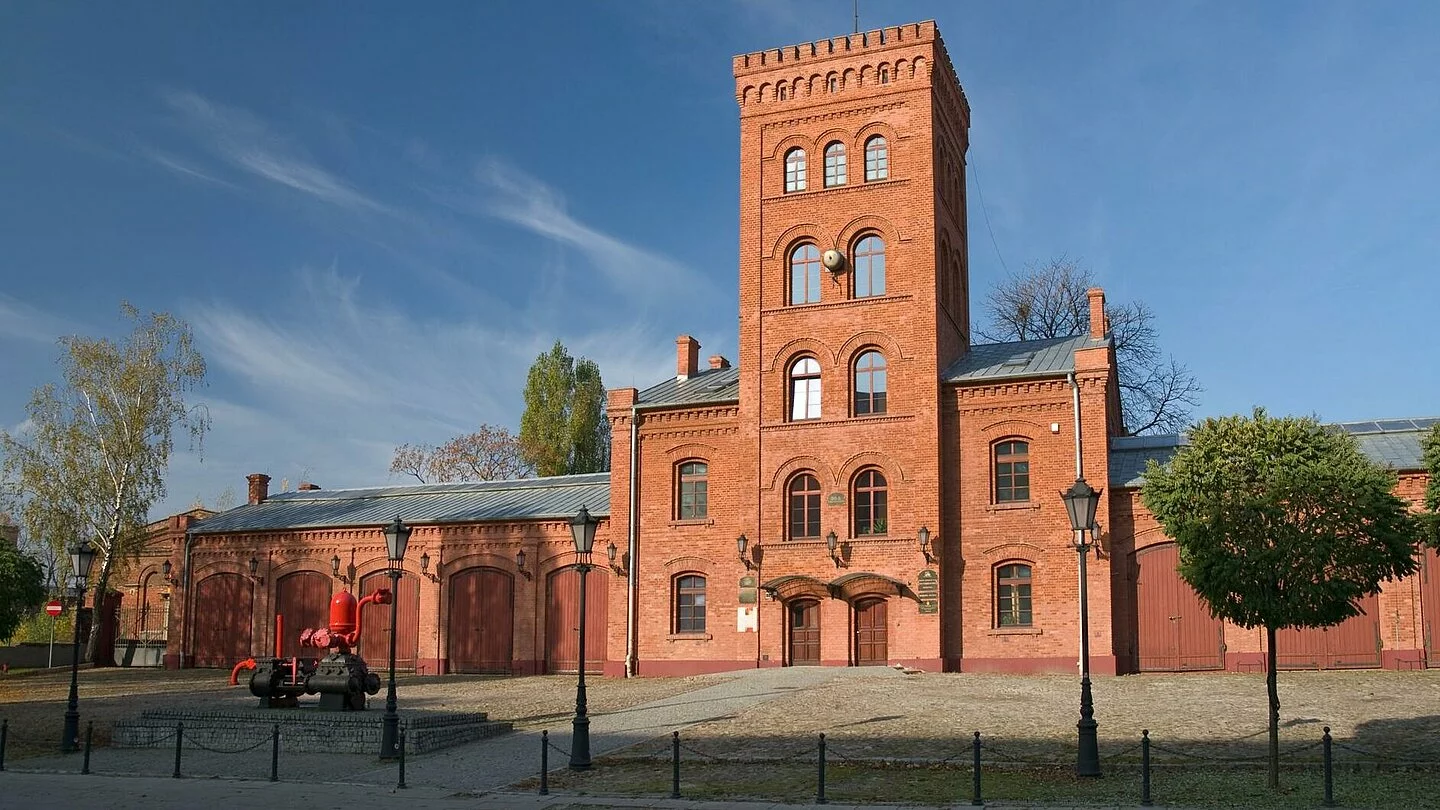
The factory–residential complex along the Jasień River was built in the 19th century by Karol Scheibler, the wealthiest industrialist in Łódź. Designed as a self-sufficient “city within a city” inspired by English industrial settlements, it included factory buildings such as a massive castle-like spinning mill, warehouses, workers’ housing, a school, fire station, two hospitals, a gasworks, company club, shops, owners’ residences, and its own railway siding. All of this was arranged along straight cobbled streets, forming a unified architectural whole.
The urban complex known as “Księży Młyn” (literally “Pastor’s Mill”) is the largest preserved factory district in Łódź from the second half of the 19th century. It was built on the site of a former milling settlement owned by a local pastor, which gave the area its name. The district was developed by Karol Wilhelm Scheibler, an entrepreneur from the western Rhineland who arrived in the Kingdom of Poland in 1848 and later settled in Łódź. He began building his textile empire with a factory complex at Wodny Rynek (Water Square), today known as Plac Zwycięstwa (Victory Square). His subsequent investments expanded into Księży Młyn, where he established the largest integrated cotton manufacturing complex in the city, complete with a workers’ settlement and the director’s residence. Scheibler’s experience in Western Europe and his openness to innovation made him one of Łódź’s leading factory owners and a role model for many contemporary industrialists.
In the narrow sense, Księży Młyn refers specifically to the settlement, massive spinning mill, and workers’ houses situated on the western side of Przędzalniana Street, between Tymienieckiego and Fabryczna streets and Źródliska Park I. In the broader sense, the name encompasses the entire urban complex that developed up to the 1920s, including the estates of the Scheibler and Grohman families. The complex was officially recognized as a monument of industrial architecture in 1971.
With the decline of Łódź’s textile industry, the district’s function changed. Today, Księży Młyn attracts tourists, artists, and photographers. Its unique post-industrial interiors host cultural events, festivals, and fashion shows, while former mansions have been transformed into museums.
Street Art Murals
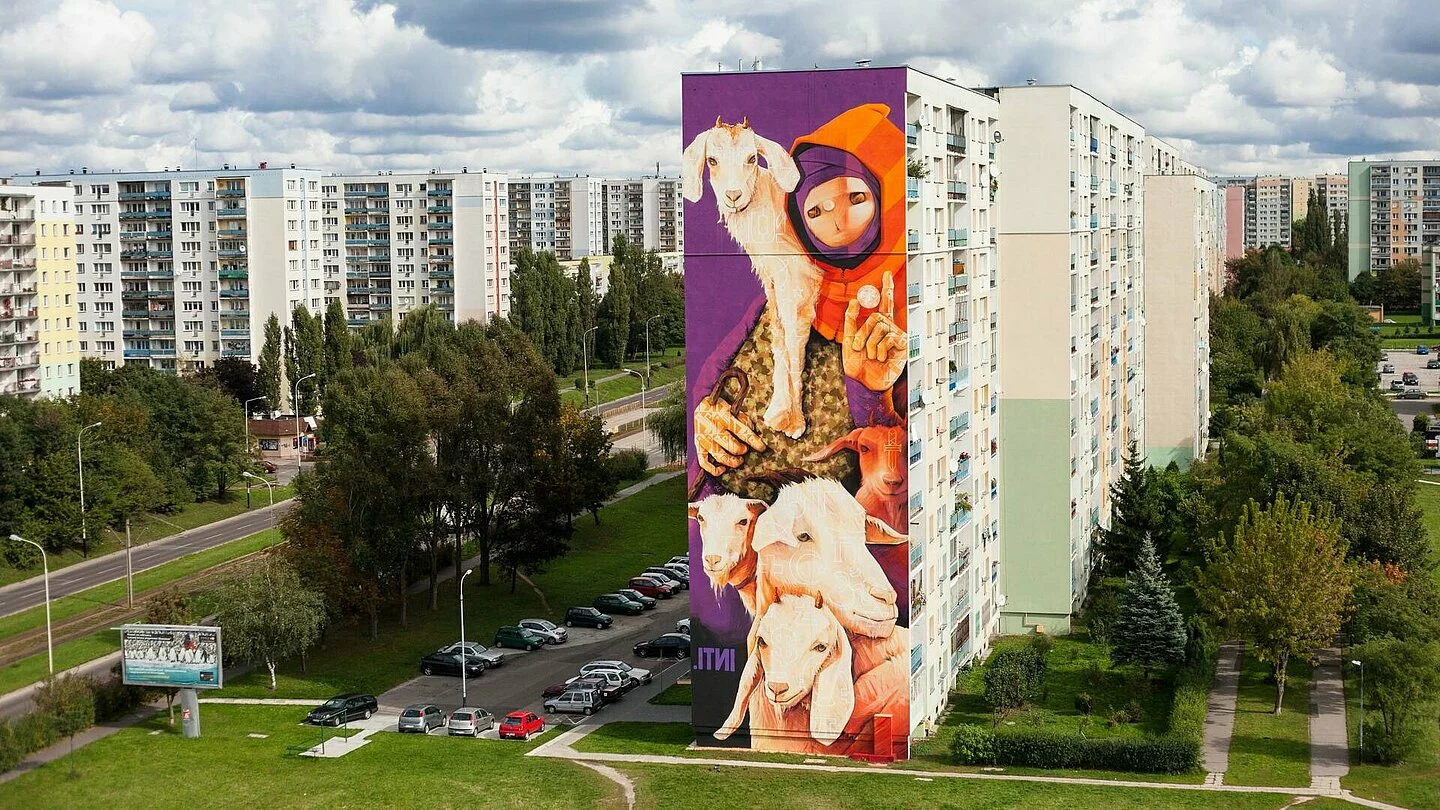
The walls of more than 170 buildings in Łódź are decorated with murals, forming the largest open-air urban gallery in Poland. These works were created by well-known Polish artists (including Proembrion, M-City, and Etam) as well as internationally recognized street artists such as Osgemeos, Eduardo Kobra, Inti, Aryz, and Remed. The murals have been appearing for many years as part of the Urban Forms Gallery festival, and earlier during the International Graffiti Festival. Today, the city’s outdoor gallery includes not only graffiti but also a wide range of wall installations made from metal rods, car parts, mirror fragments, and even moss.
One of the first modern murals in Łódź was created in 2011 by the local artistic group Design Futura at 152 Piotrkowska Street. It earned a place in the Guinness Book of Records and, for a time, was recognized as the largest piece of graffiti in the world.
Sources: https://lodz.travel/en/